I work from my studio at The Chocolate Factory in Wood Green, North London. It is where drawings, remembered places and fragments of observation begin to develop into paintings, often moving considerably away from their original source.
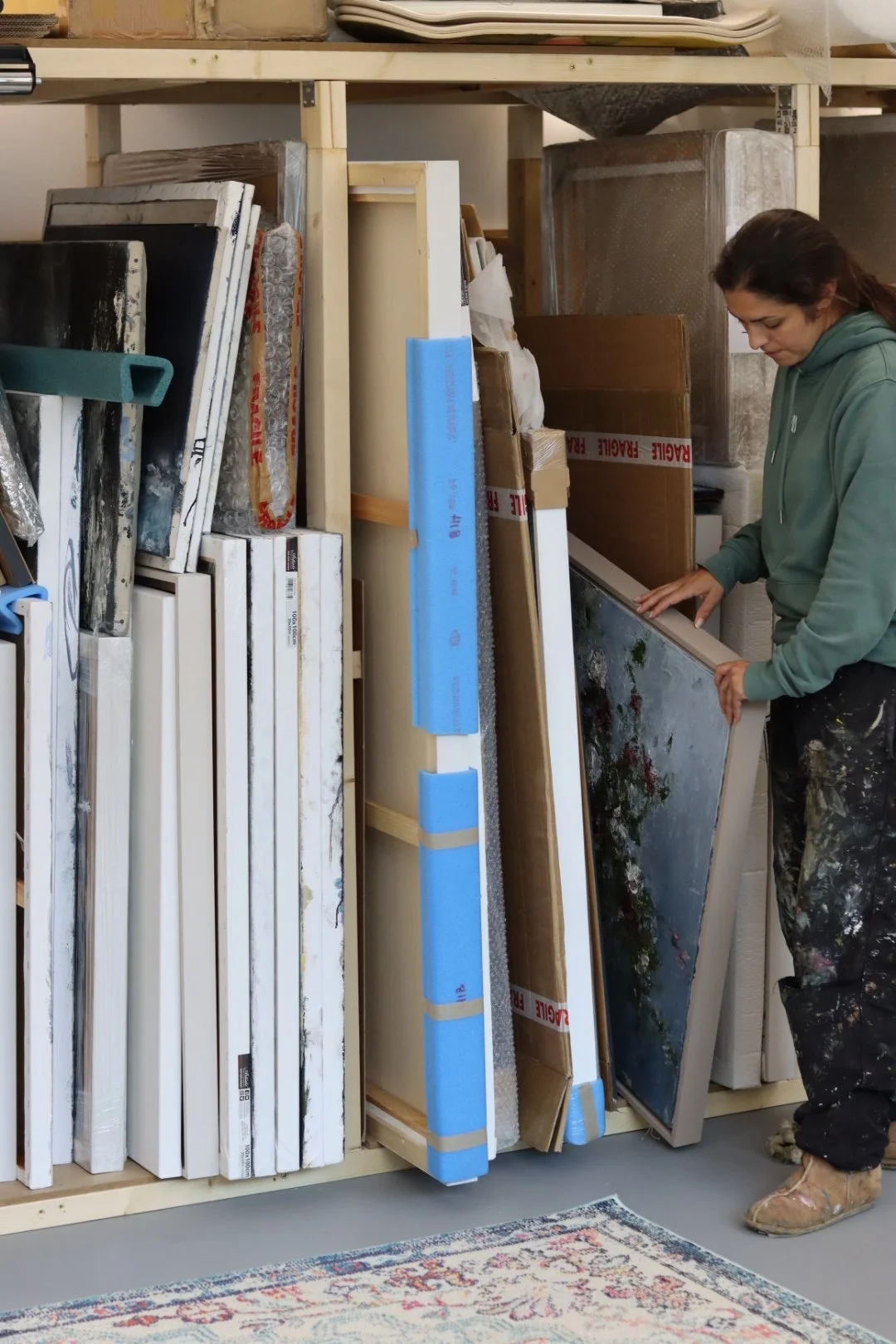
The studio is an important part of the work. I tend to have several paintings in progress at once, allowing ideas, colours and marks to move between them rather than treating each canvas as an entirely separate exercise.
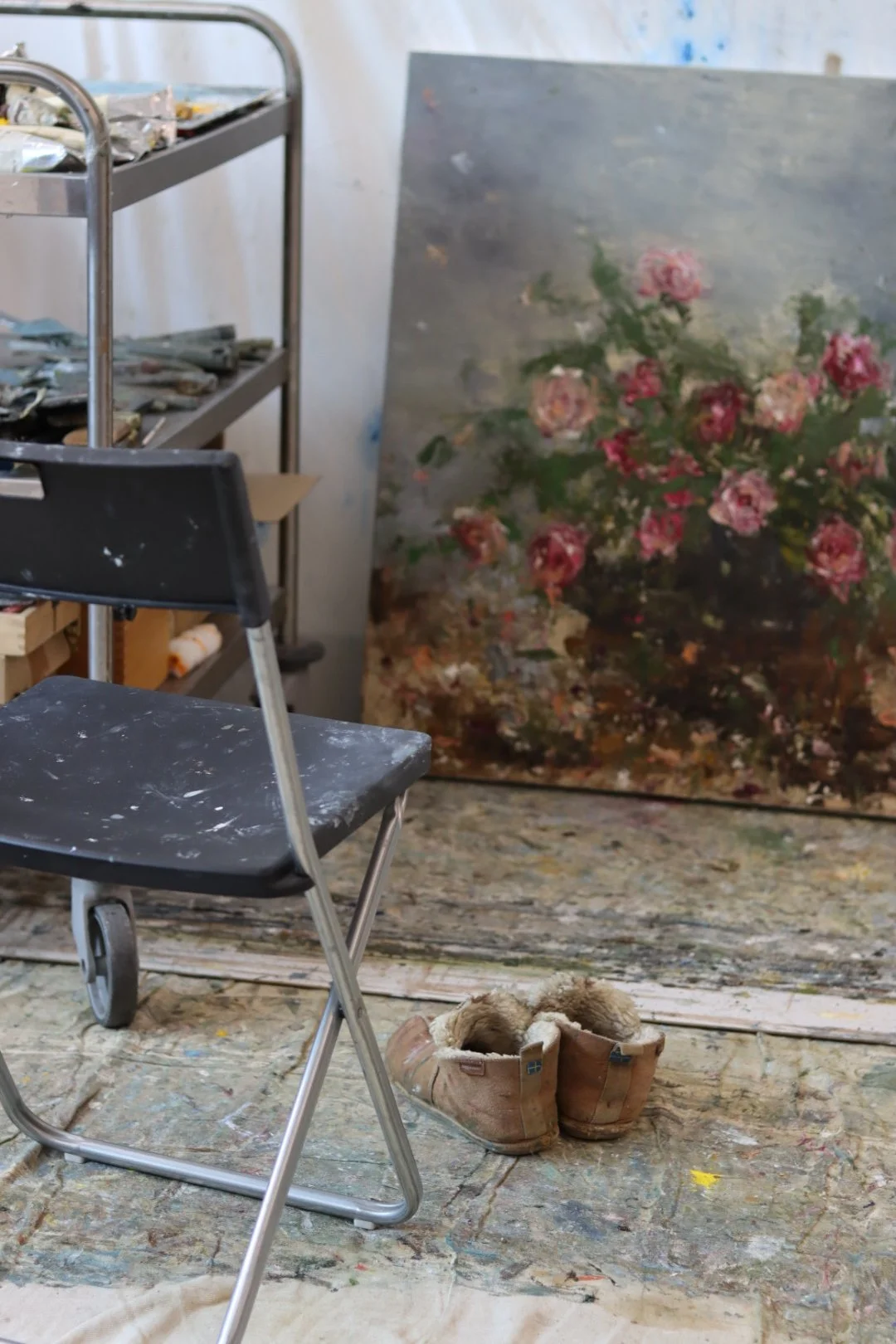
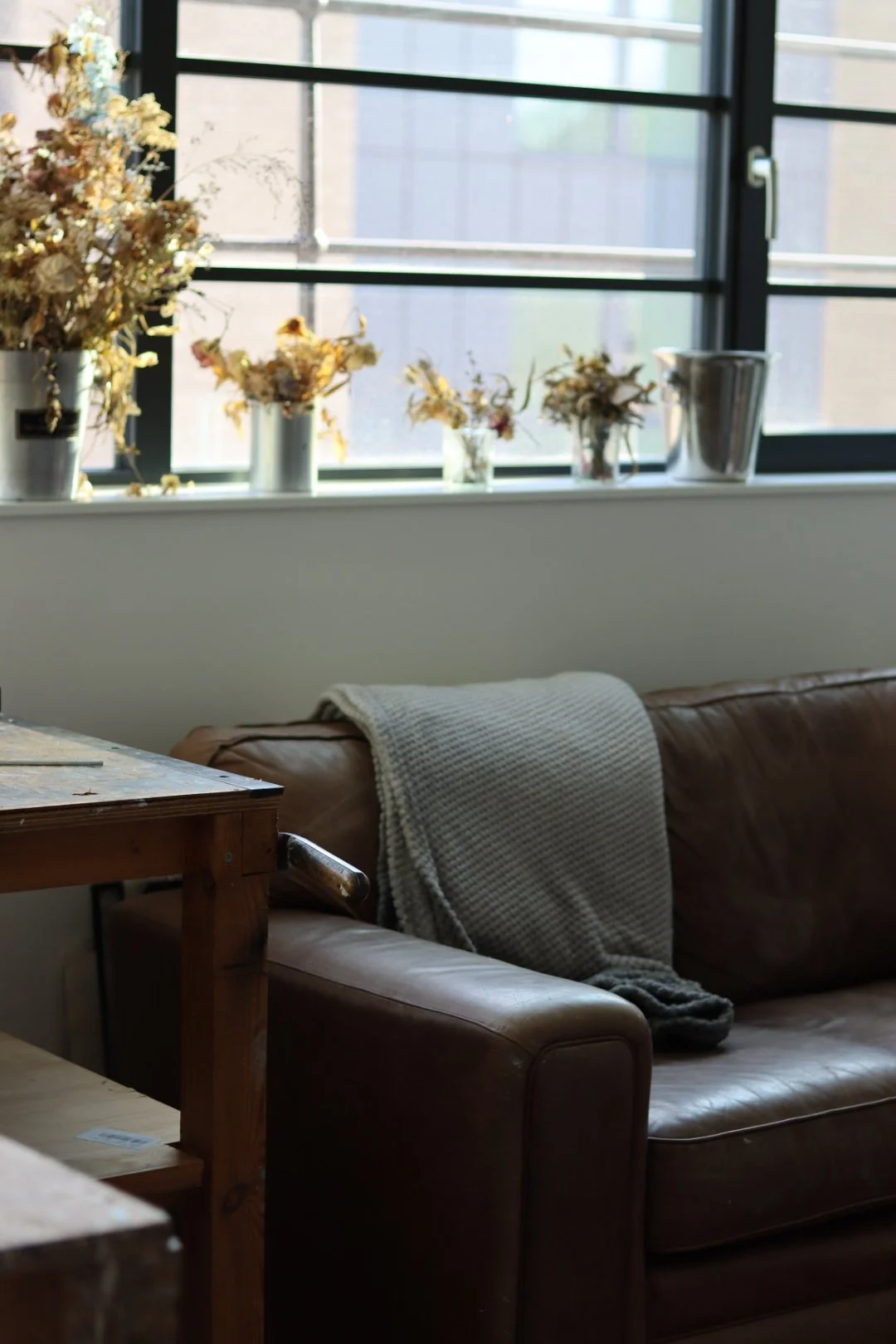
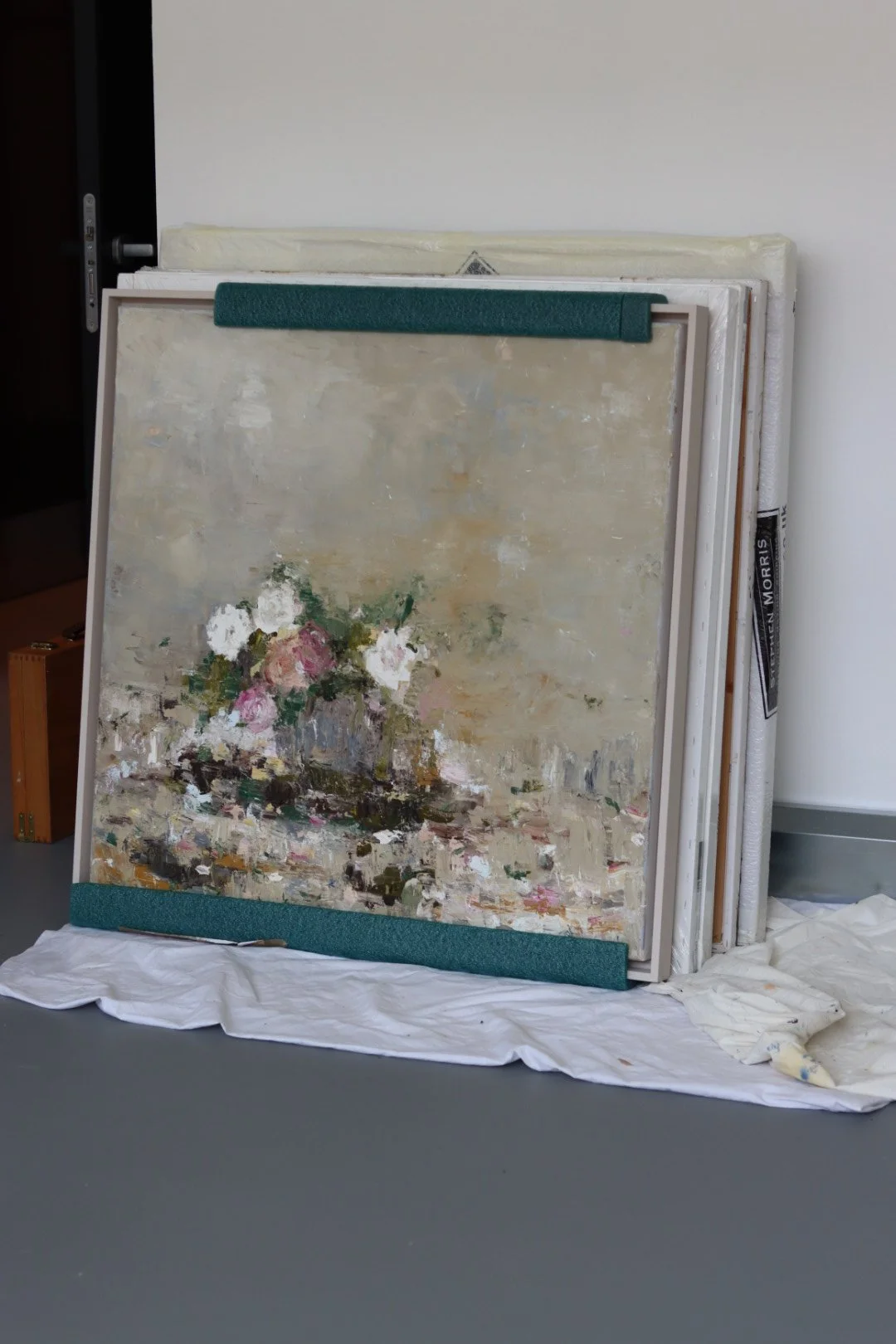
In the studio
I work predominantly in oil, using broad brushes, palette knives, cloths and the edges of tools to build, disturb and remove paint.
A painting will often begin quickly, with large areas of tone and colour establishing its structure before the image becomes too fixed. From there the process becomes slower and more responsive. Paint is dragged, scraped back, wiped away, painted over and scratched into; forms are allowed to emerge and disappear until the surface begins to hold a history of those decisions.
I am interested in retaining that evidence of making. I want a finished painting to feel resolved without becoming overly controlled.
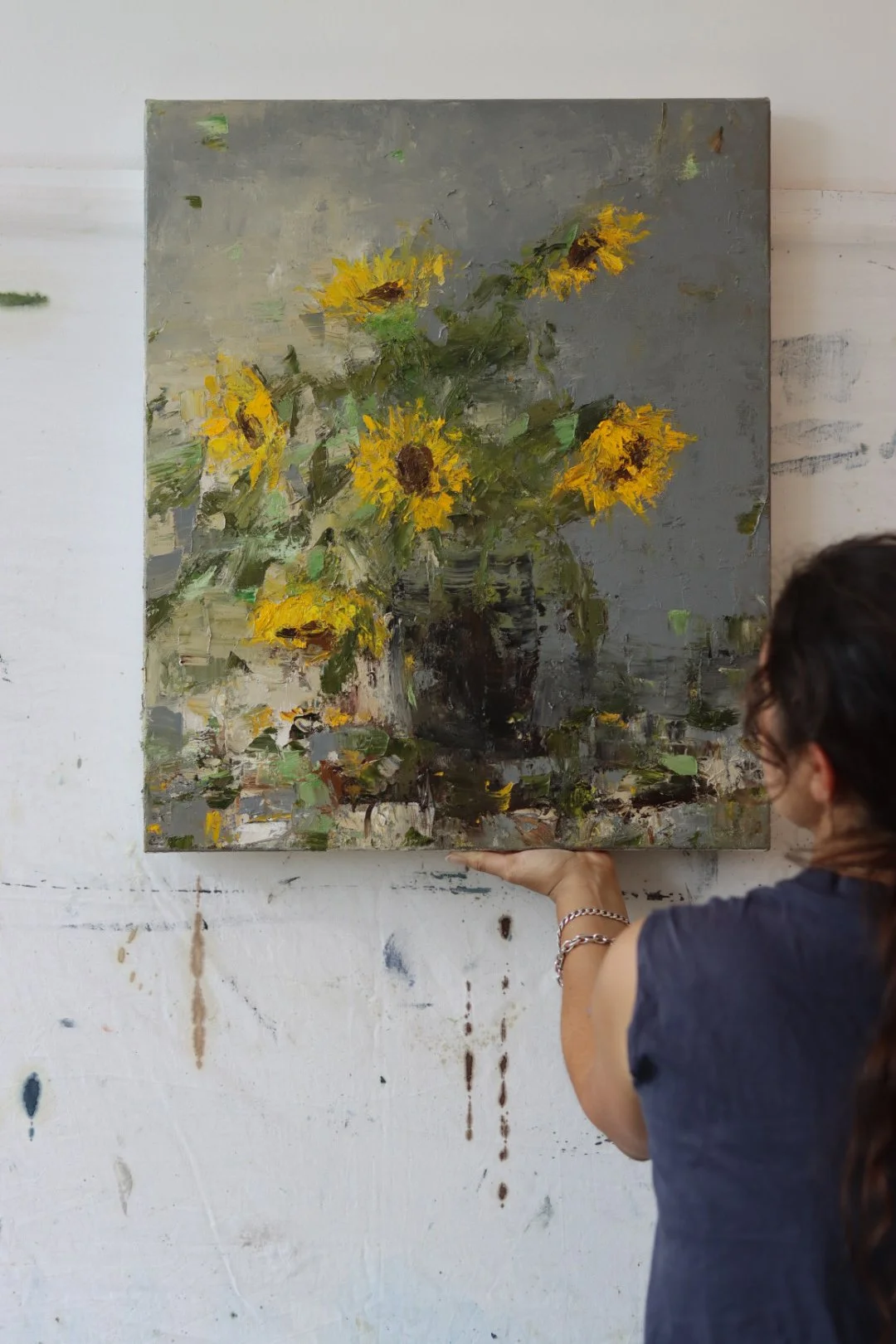
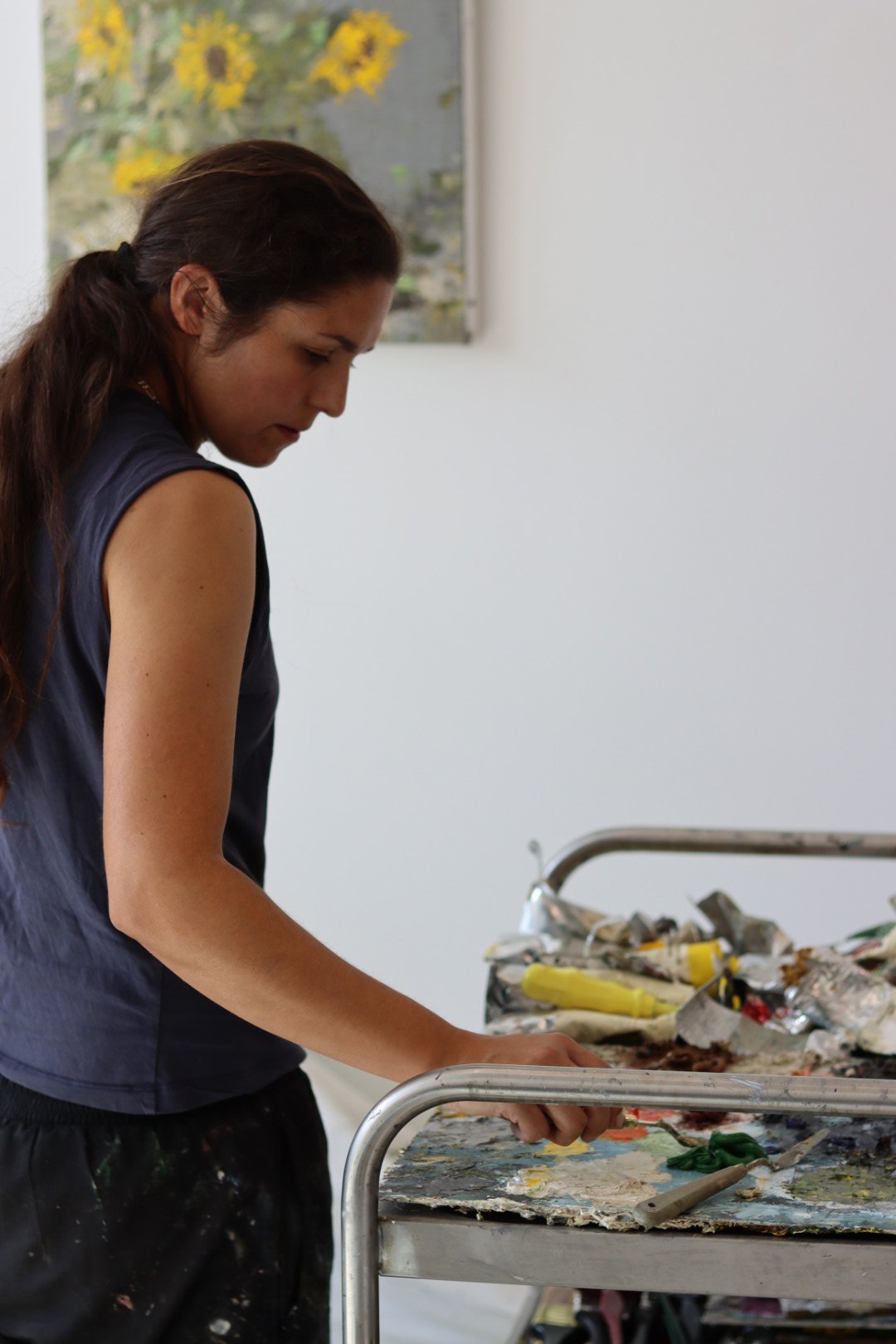
Process
Drawings and rapid studies made from observation often provide a starting point, particularly for landscapes and coastal work, but I rarely follow them literally.
Once a painting begins, memory and the material itself become equally important. A horizon may shift or disappear entirely; flowers can become areas of colour and movement rather than botanical forms; a recognisable place may gradually dissolve into something much less specific.
For landscapes and seascapes I often work from a relatively restricted palette, building atmosphere through relationships between colour rather than descriptive colour alone. The floral paintings allow the palette to open out, but the underlying process remains the same.
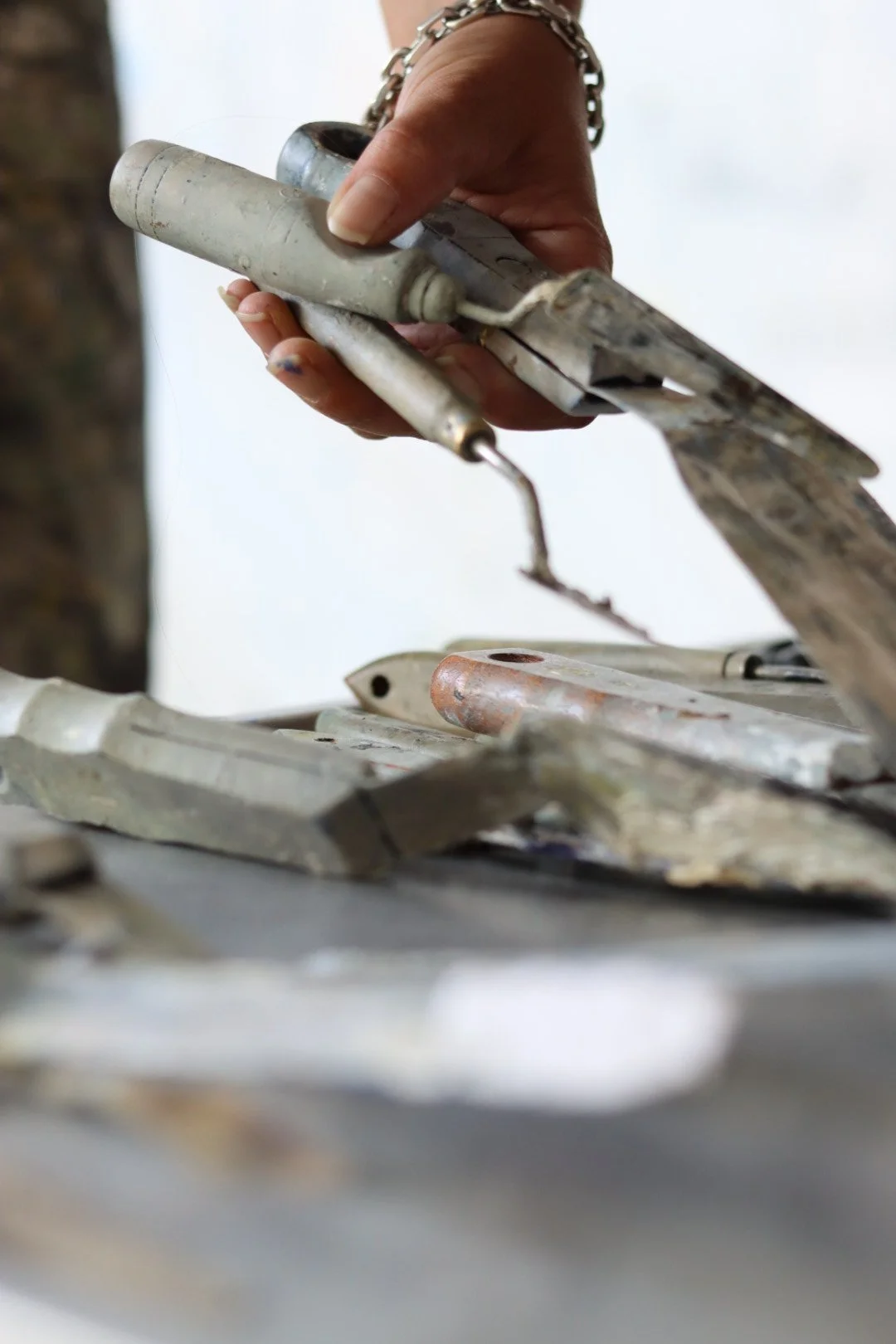
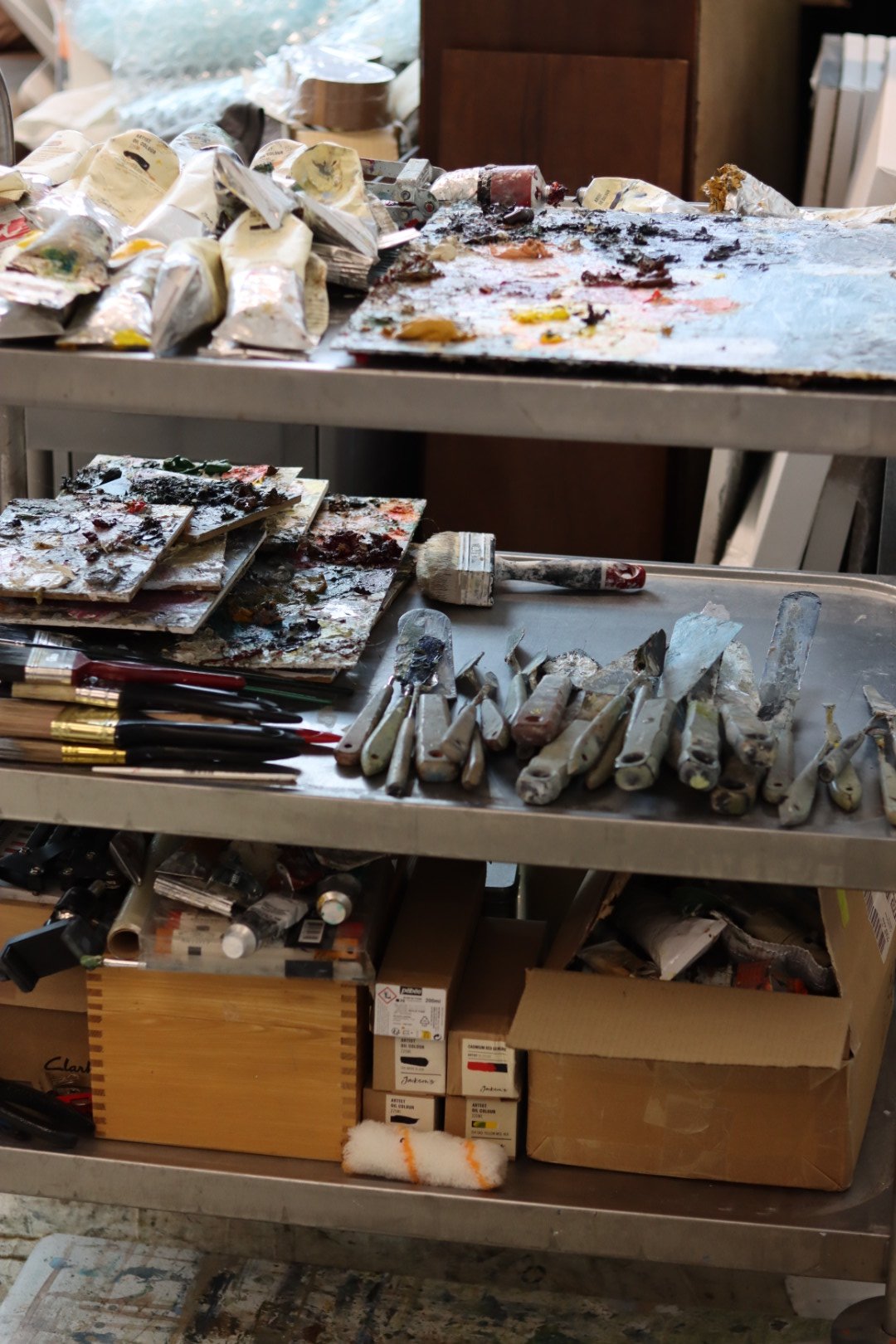
Scale
The studio allows me to move between very different scales, from small studies to paintings well over a metre and larger commissioned works.
Scale changes the way I paint. Larger canvases require more physical movement and give marks room to remain open and unresolved. Smaller works tend to be more immediate, often recording a particular colour relationship, gesture or moment before it disappears.
I am increasingly interested in what happens when a painting becomes large enough to occupy the viewer’s field of vision rather than simply sit within it.
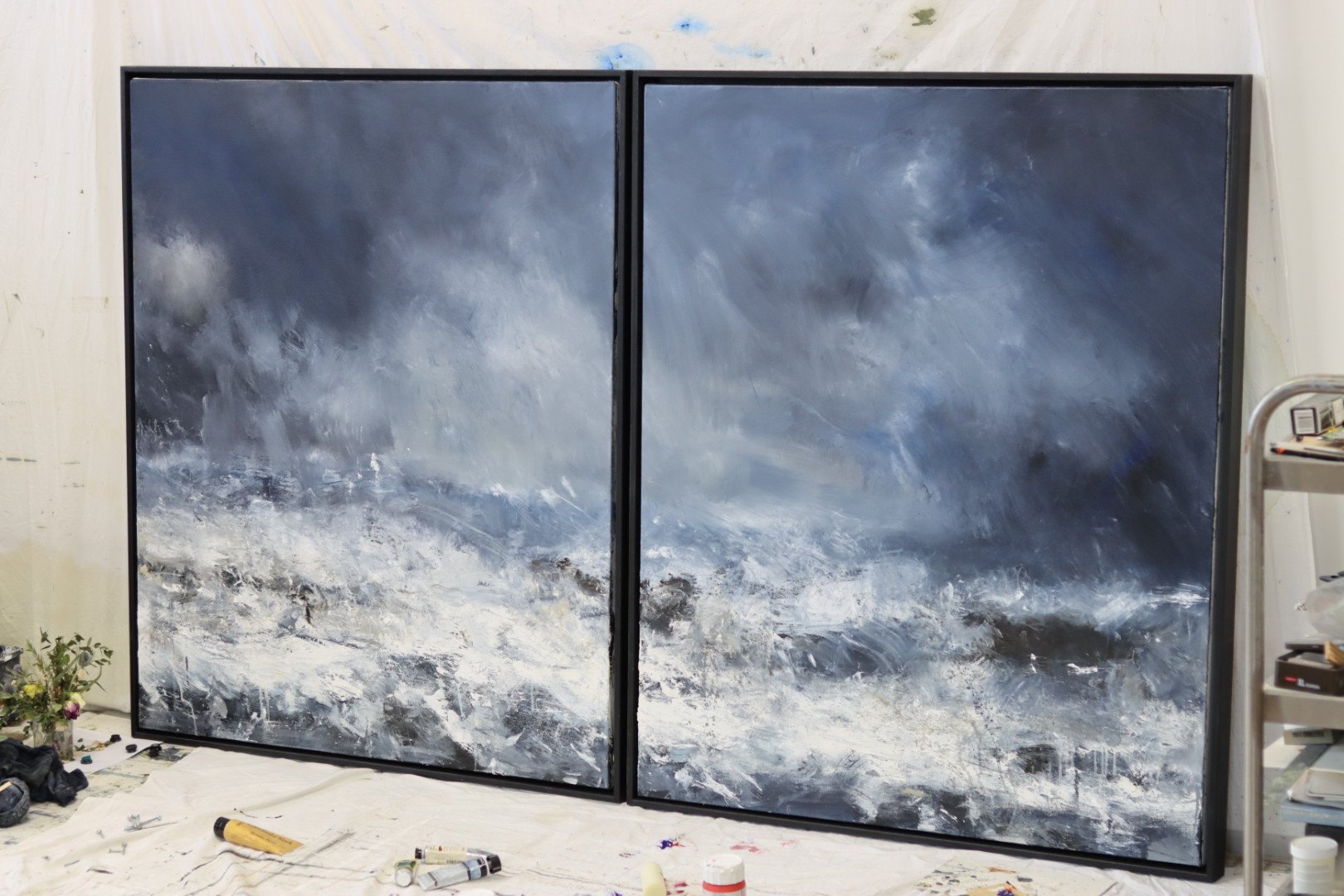
Ongoing practice
Paintings are rarely made in complete isolation from one another. Works in progress, finished paintings, drawings, colour notes and fragments of previous ideas coexist in the studio, and something discovered in one work will often reappear elsewhere.
The subjects change; sea, landscape, flowers, hedgerows, but I am interested in the same underlying questions: how much information a painting needs, what can be removed, and the point at which an image begins to hover between recognition and abstraction.
Studio visits
Studio visits are available by appointment in North London.