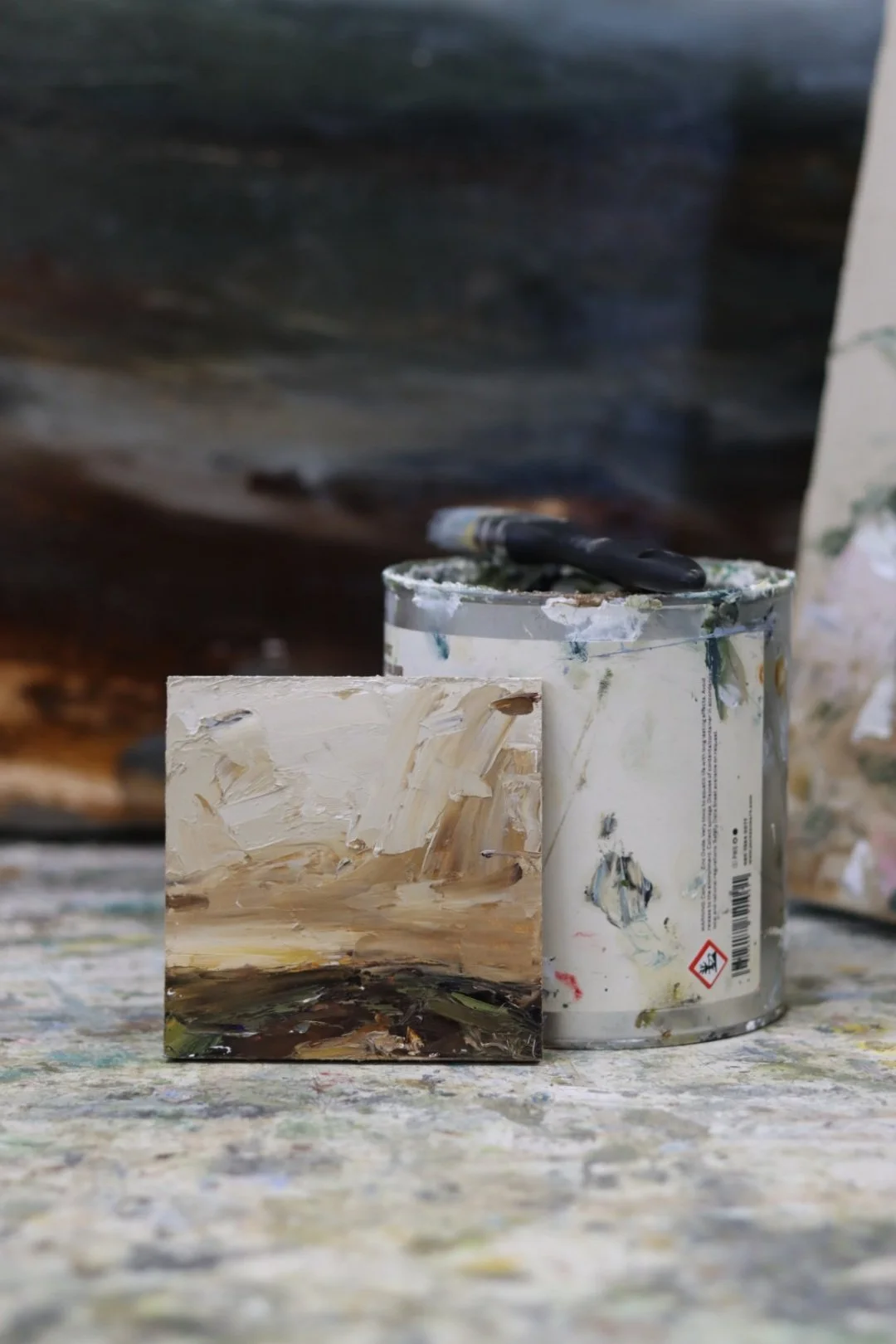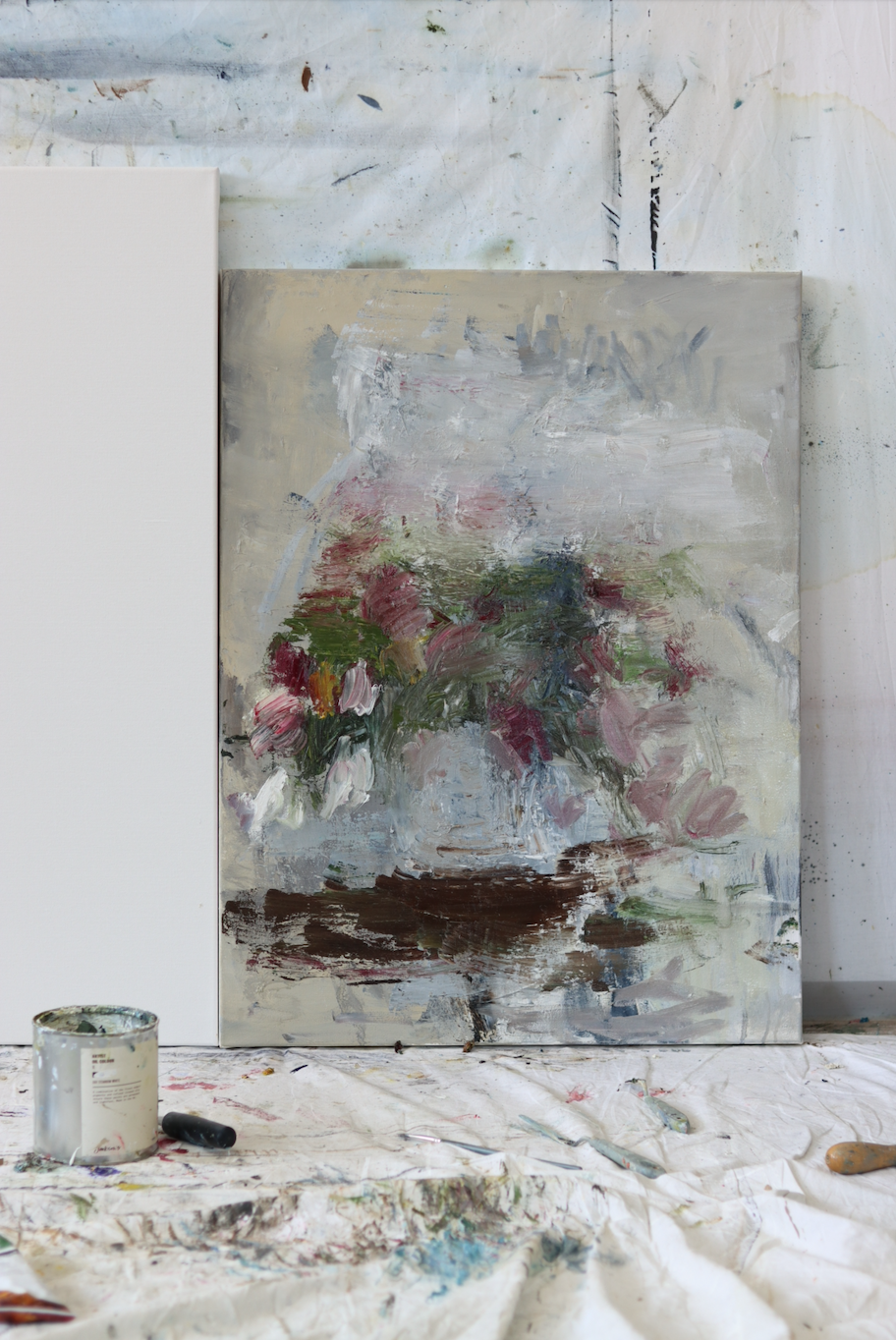
Painting has taught me that attention is not something you either have or do not have. It is something you practise. Something you return to, again and again, often imperfectly.
In the early years of learning to paint, I thought attention meant focus in the narrow sense. Long hours. Fewer distractions. Silence. I believed that if I could only remove interruption, the work would somehow clarify itself. What I did not understand then was that attention is not about removing life from the process. It is about learning how to look within it.
Over time, painting has become less about producing images and more about noticing what is already present. Light moving across a surface. The way colour shifts when placed next to something unexpected. The rhythm that builds when marks are allowed to accumulate without being overly controlled. These are not things that can be rushed, even when time itself is limited.
I often think about how different my relationship with painting is now compared to when I began. Not in terms of ambition or seriousness, but in how I measure success. Early on, success felt external. A finished canvas. Approval. Momentum. Now it feels quieter. Success is when a painting holds my attention long enough for something to reveal itself.
This change has not happened suddenly. It has come through repetition, through failure, through returning to the studio when I am tired or uncertain, and through learning to trust that not every session needs to produce something resolved. Some days the work is simply about staying present.
Looking is not passive. It is an active decision. To stay with what is in front of you, even when it feels unresolved or uncomfortable, is a form of discipline. Painting demands this kind of looking. It asks you to notice when something is slightly off rather than obviously wrong. It asks you to respond rather than impose.
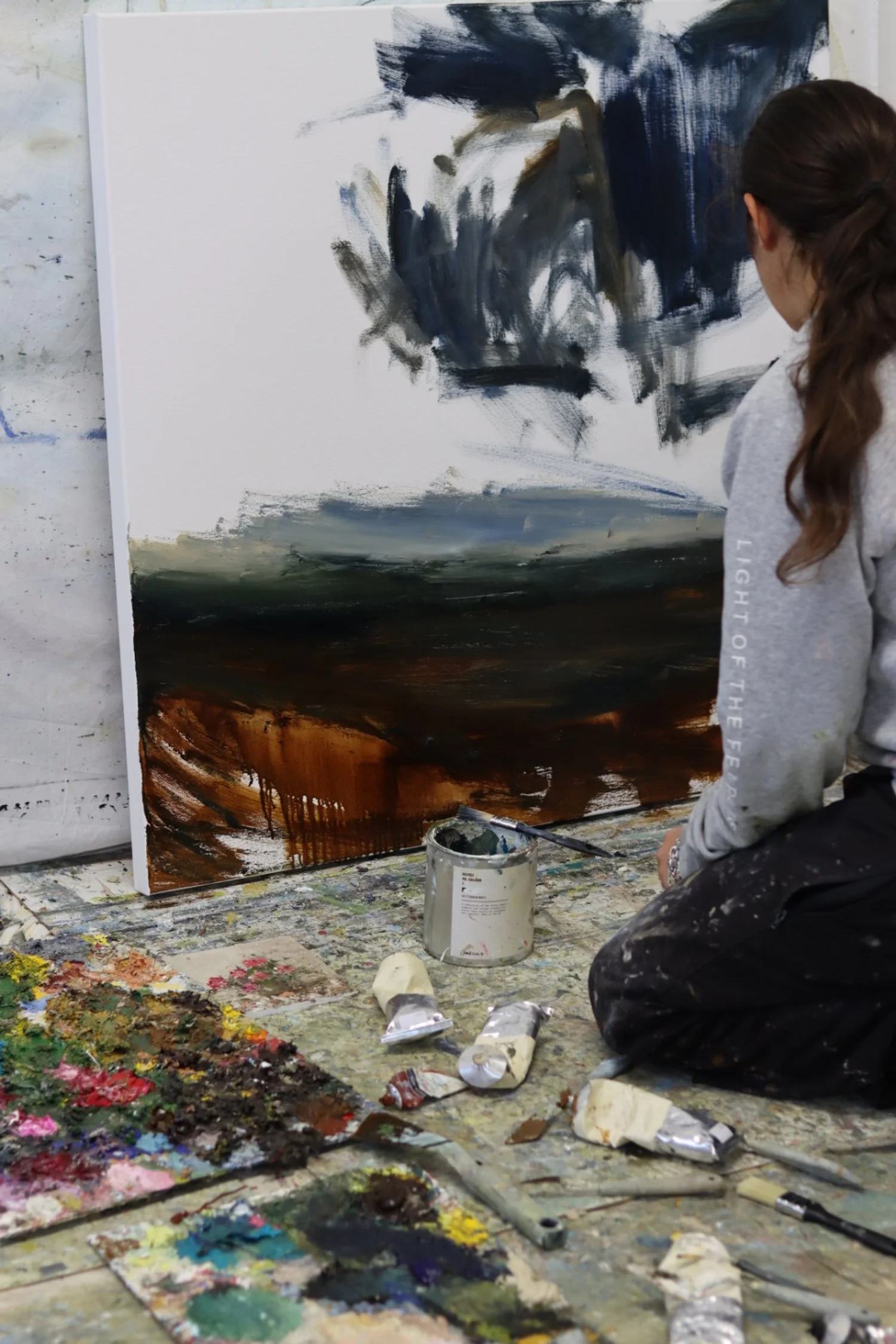
When I am painting, particularly in the early stages, I try not to think in terms of objects. I am not painting a vase or a horizon or a hedgerow. I am responding to weight, direction, temperature and movement. The subject is there, of course, but it acts more as a starting point than a destination. What matters is how the painting begins to organise itself on the surface.
This way of working requires patience. It is tempting to rush towards recognisable forms, to resolve areas too quickly in order to feel progress. But often the most interesting moments happen when I resist that urge. When I allow uncertainty to remain long enough for something more nuanced to emerge.
There is a particular kind of tension that appears in the middle of a painting. It is neither the excitement of the beginning nor the satisfaction of completion. It is the point at which the painting could go in several directions, none of them guaranteed. This is where attention matters most.
At this stage, I try to slow down. To look without immediately responding. To notice where the painting feels alive and where it feels overworked. Sometimes this means stepping back physically. Other times it means leaving the studio altogether and returning later. Distance can be as useful as proximity.
I have learned that paintings often know more than I do. If I listen carefully, the work will suggest what it needs next. This does not mean abandoning judgement. It means allowing the painting to lead the conversation rather than forcing it to conform to an idea I had at the outset.
This approach has been shaped, in part, by the realities of working alongside motherhood. Time is no longer expansive. Studio sessions are shorter, more fragmented. I cannot rely on long stretches of uninterrupted work. Instead, I have had to learn how to arrive quickly, how to give my full attention to the painting in front of me, even if only for a short while.
Interestingly, this has made my attention sharper. When time is limited, there is less room for indecision. I am more likely to trust my instincts, to commit to a mark, to accept imperfection rather than attempt endless correction. The work has become more direct as a result.
There is also a greater acceptance of incompleteness. Not every painting will be finished in one session. Some will sit for days or weeks, waiting for the right moment. This waiting is not wasted time. It is part of the process. During this period, I often notice details that were invisible before. Subtle imbalances. Areas that need restraint rather than addition.
Learning to paint slowly does not mean working slowly in a literal sense. It means allowing the painting to unfold at its own pace, even if that pace is uneven. Some passages are resolved quickly. Others resist. The challenge is to recognise the difference.
I am increasingly interested in how restraint functions within a painting. Knowing when to stop is as important as knowing when to continue. Overworking can flatten a surface, draining it of energy. Leaving something unresolved can allow the viewer space to engage.
This idea of leaving space has become central to my practice. I want the paintings to feel open rather than closed. Suggestive rather than declarative. I am not trying to tell the viewer what to see. I am inviting them into a conversation.
Attention extends beyond the act of painting itself. It influences how I live with the work once it leaves the studio. Exhibitions are moments of pause, opportunities to see paintings together and to notice relationships that were not obvious when they were made. Patterns emerge. Recurring colours. Shared gestures. These observations feed back into future work.
Showing work publicly has also taught me to relinquish a certain level of control. Once a painting leaves the studio, it begins a life of its own. It will be seen in different contexts, alongside other works, by people who bring their own experiences to it. This is not something to fear. It is part of what gives the work meaning beyond the act of making.
Collectors sometimes ask how long a painting took to make. I understand the curiosity, but the question is difficult to answer. A painting may have been physically worked on for a few hours, but it carries years of looking, thinking and learning within it. Time in painting is cumulative rather than linear.
There are moments when I question whether this slow, attentive approach is practical in a world that often rewards speed and visibility. But painting has always existed slightly out of step with broader cultural rhythms. Its value lies in its ability to resist instant consumption.
For me, painting is a way of staying connected to the physical world. To materials. To surfaces. To the act of making something by hand. In a life that is increasingly mediated by screens and schedules, the studio offers a different tempo.
This does not mean the work is nostalgic or escapist. It is grounded in the present. The paintings carry the marks of how and when they were made. They reflect the constraints as much as the freedoms of my current life.
Attention, in this sense, is not about perfection. It is about honesty. About responding truthfully to what is in front of you, whether that is a canvas, a landscape, or a fleeting moment of quiet.
I am still learning how to do this. Some days the attention comes easily. Other days it feels fractured, pulled in multiple directions. On those days, painting becomes an anchor. A place to return to, even briefly.
Perhaps this is what keeps me coming back to the studio. Not the promise of resolution, but the practice of looking. Of noticing. Of being present, however imperfectly.
Painting does not offer certainty. It offers a way of paying attention to the world as it unfolds. For now, that feels enough.