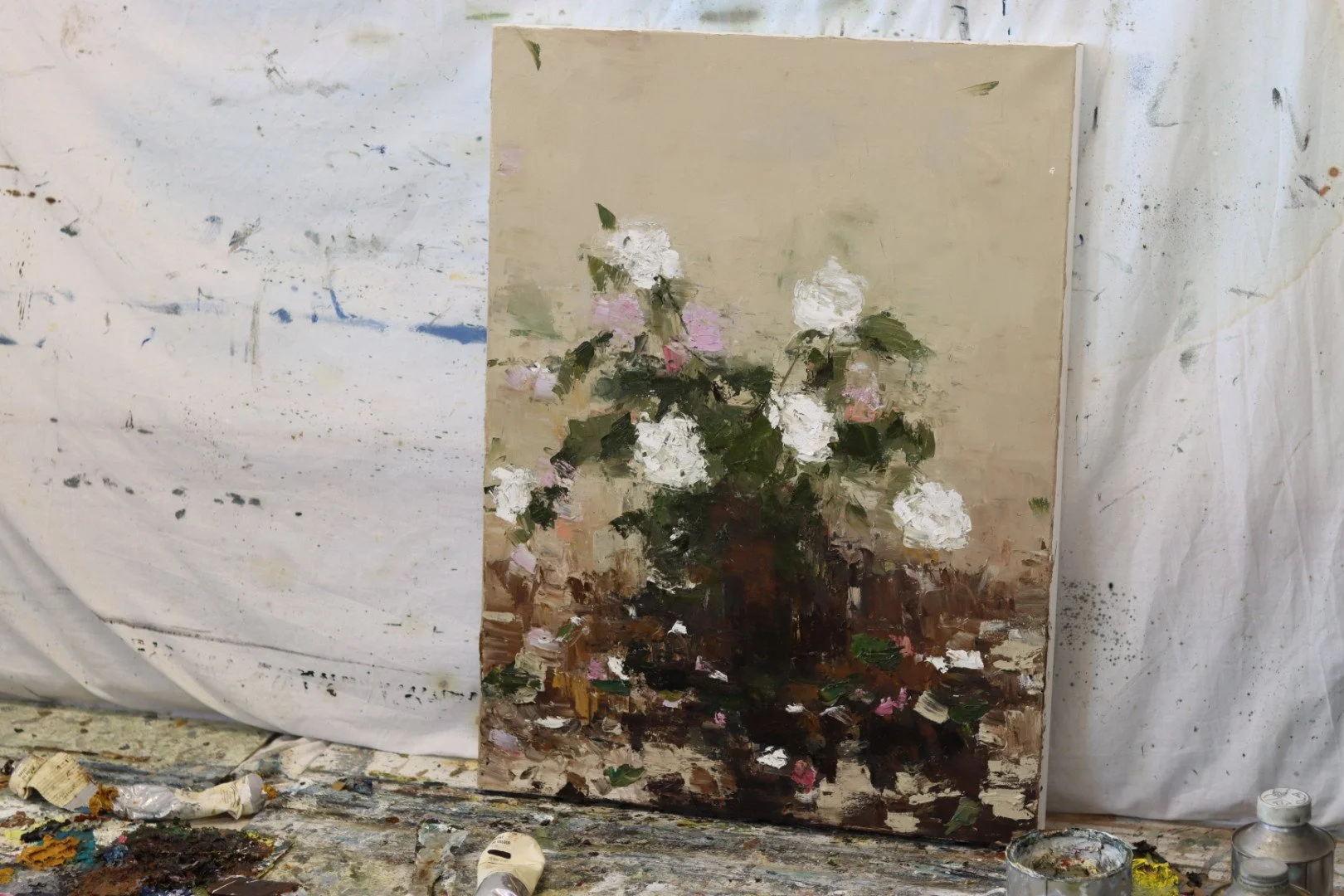
A Stillness Between Flowers reflects on the gentler side of painting, where atmosphere, space and the life between forms matter as much as the flowers themselves.
Read More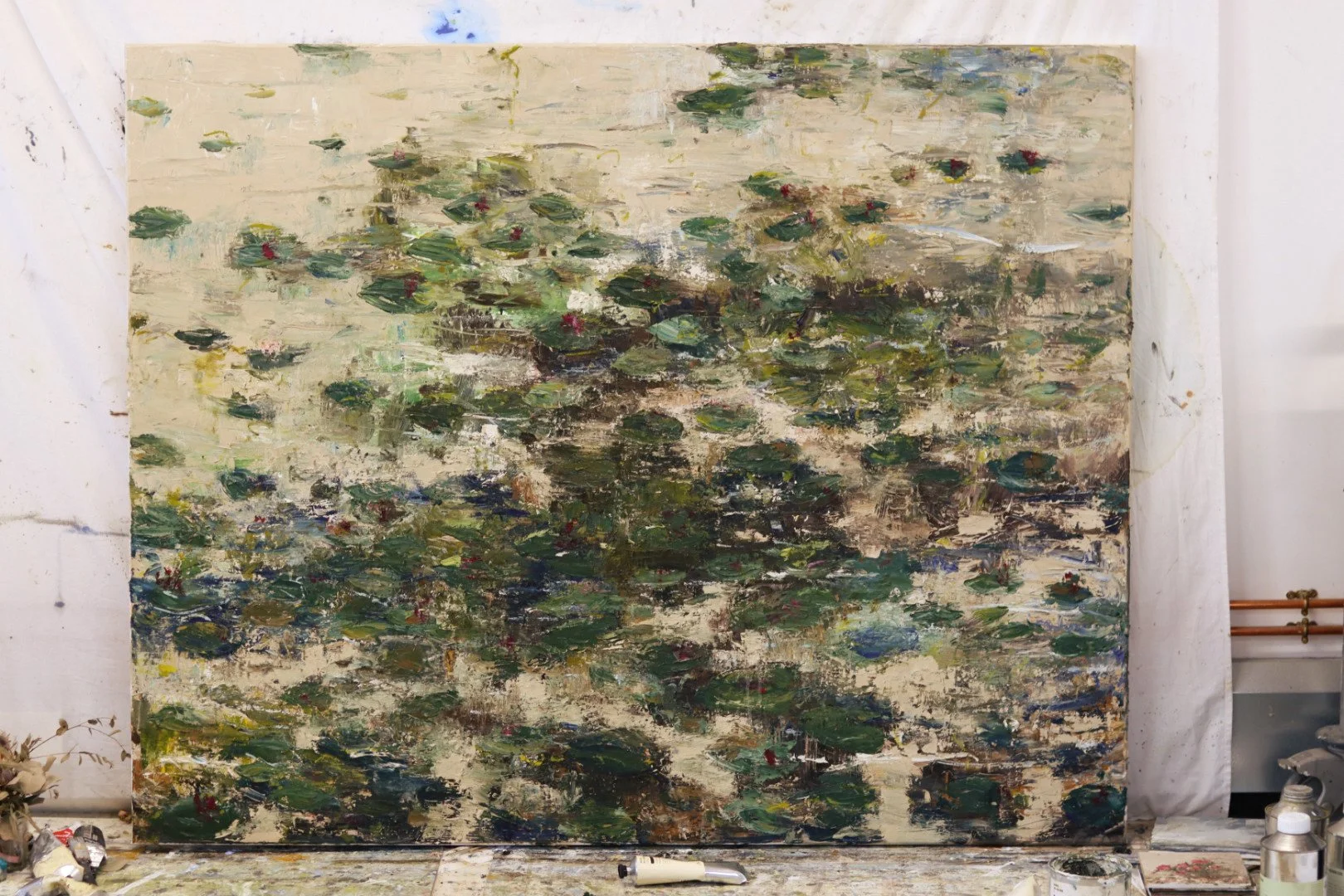
Waterlilies
This painting began without a plan. Waterlilies arrived not as an image to replicate, but as a sensation. A memory of light sitting on water, of growth and stillness existing at once. The surface was built slowly, interrupted and returned to, allowing forms to surface and recede rather than resolve. It lives in the space between seeing and remembering, asking to be spent time with rather than decoded.
Read More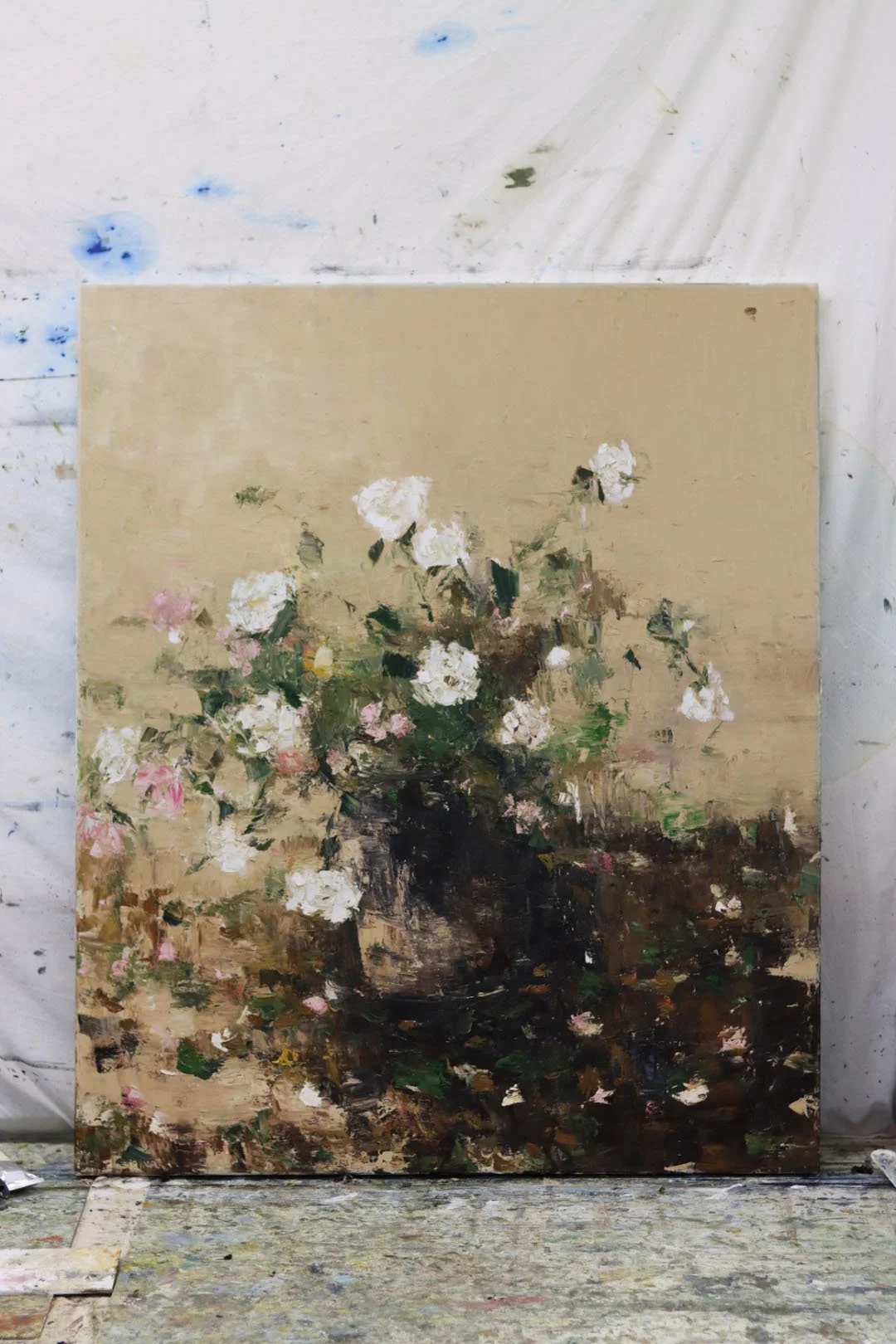
A Quiet Refusal of Form
This work resists arriving anywhere fixed. Forms loosen and soften, refusing to settle into something fully named. What remains is not an image but a state, shaped by hesitation, layering and time. The painting holds its ambiguity carefully, allowing space for looking without resolution, and for meaning to shift rather than solidify.
Read More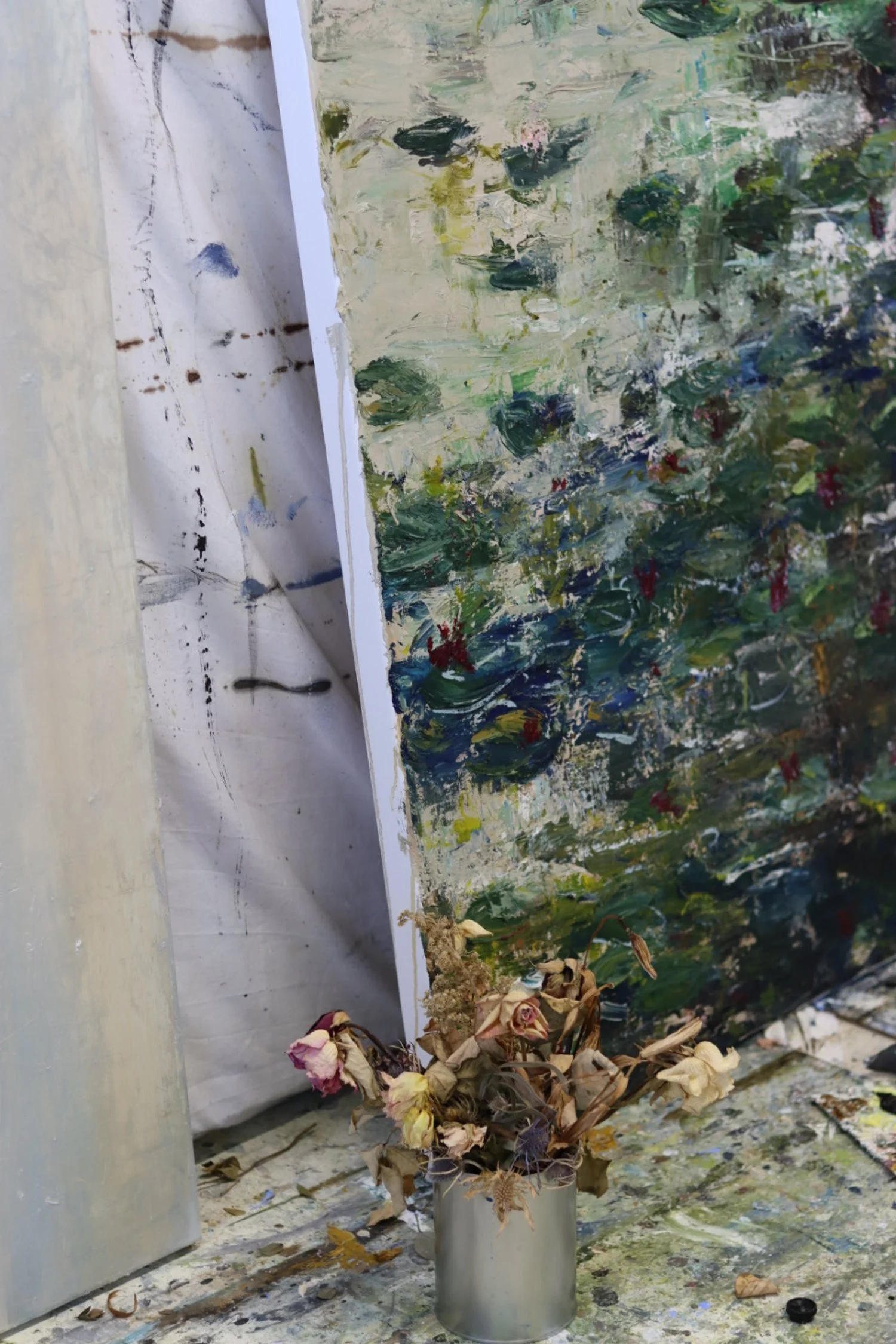
Alla Prima and the Discipline of Letting Go
Alla prima is often described as speed or spontaneity, but for me it is a discipline. Working wet into wet demands clarity, restraint and trust. Each decision narrows the field of possibility, and letting go becomes as important as knowing when to act. This essay reflects on painting directly, accepting uncertainty, and learning to stop before the work is over explained.
Read More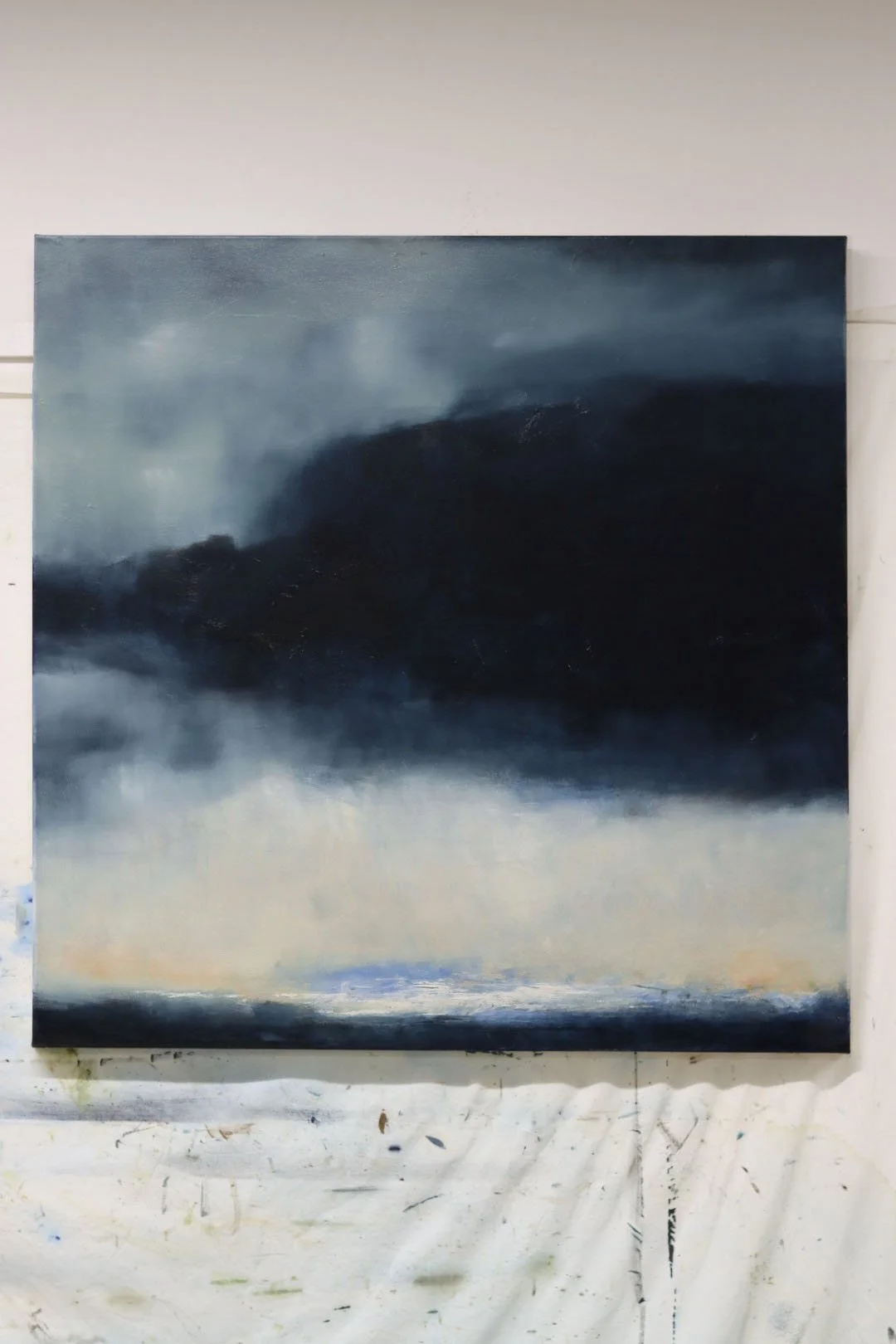
A Moment Held
A Moment Held explores the quiet intensity of a pause in time, a moment where nothing visibly changes, yet everything feels charged. The landscape remains intentionally ambiguous, with hovering forms and an unsettled horizon that resists clarity or resolution. As the year draws to a close, the work reflects on the value of slowing down, of allowing space for moments that are fully inhabited before being quietly released.
Read More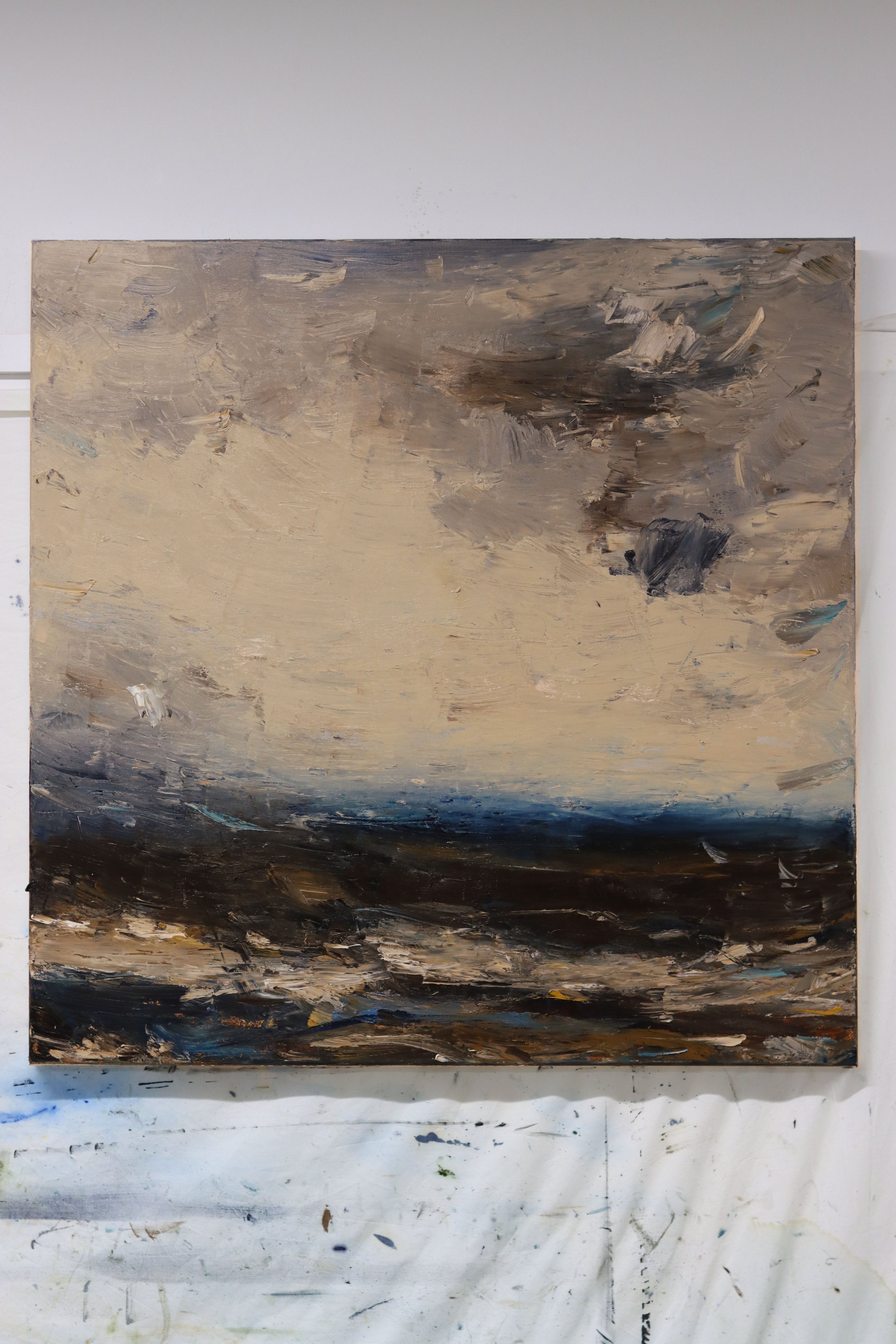
At Dusk, the Sea Waited
A reflection on dusk as a threshold, this studio note explores memory, stillness, and the quiet act of waiting at the water’s edge, where light softens and time momentarily loosens.
Read More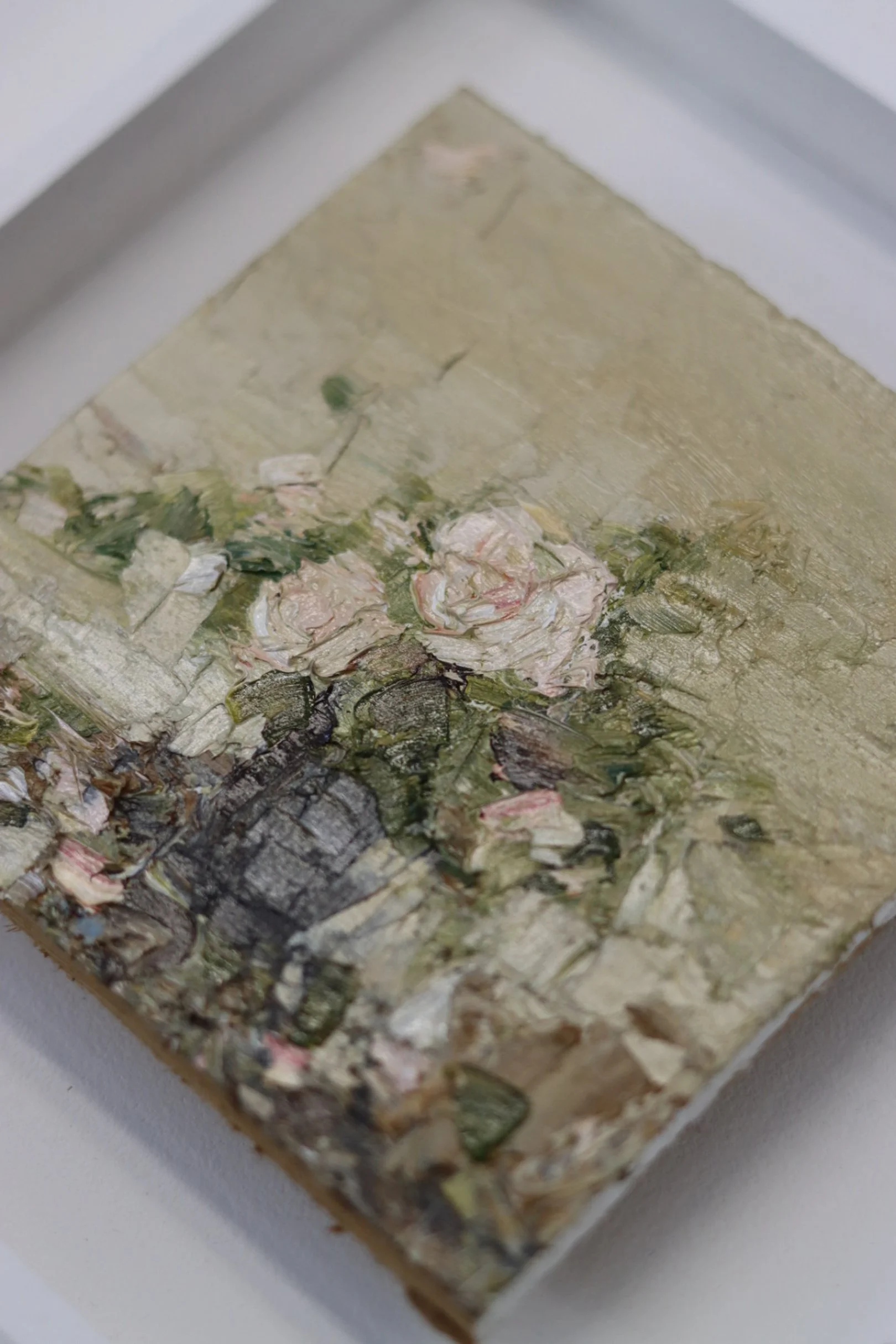
Still Life, Movement and the Quiet Refusal to Be Decorative
Still life has never felt still to me. Flowers shift constantly, even as they sit in water. They open, lean, bruise and fade. Painting them is not an act of preservation but of attention. I am less interested in holding a moment in place than in acknowledging its movement, its brief insistence on being noticed. The challenge is not to describe what I see, but to allow the painting to remain alive, unsettled, and unresolved in the same way the subject is.
Read More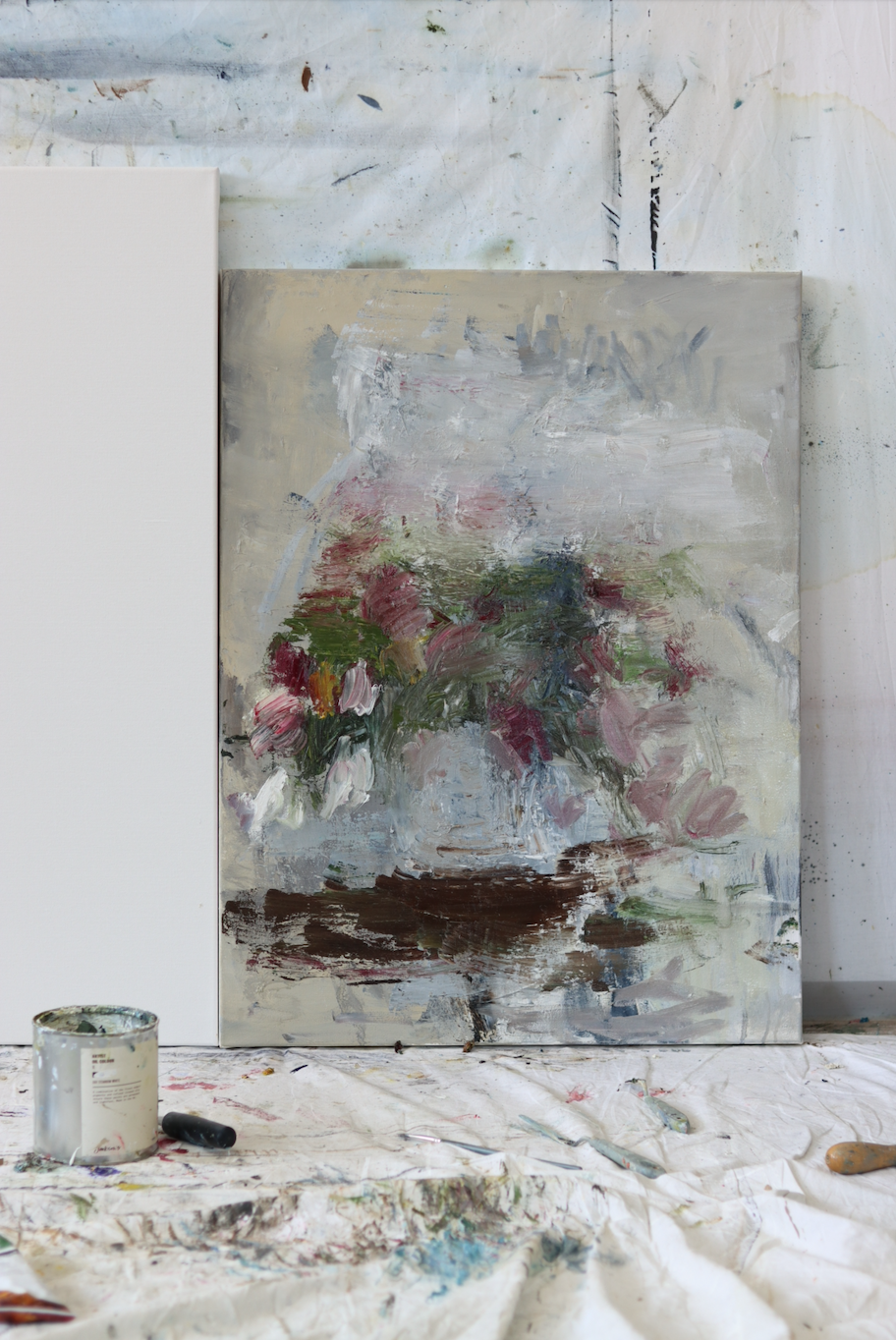
On Attention, Looking, and Learning to Paint Slowly
A time came when painting stopped fitting neatly into my days. Instead, it slipped into the margins, early mornings, half hours, the quiet before the house stirred. What I lost in uninterrupted time, I gained in clarity. Each mark began to matter more. Each decision carried weight. Painting became less about control and more about attention, about trusting what could happen when time was limited but intention was not.
Read More
Early light in the studio. Before the day begins.
Painting in the Margins: Motherhood, Time and the Studio
Motherhood has altered not just my schedule, but the way I paint. Working in fragments and early hours has made the work more immediate, more decisive. This post reflects on how limited time, attention and domestic rhythms have reshaped my studio practice, and what that has quietly given back in return.
Read More